How to Remove Pet Urine Odor from Your Home’s Air Ducts
Pet urine can create one of the strongest and most persistent odors in a home. Once the smell reaches an air duct, it spreads quickly. Each time the heating or cooling system runs, the odor can move from room to room in moments. The issue feels overwhelming, but you can correct it once you understand where the smell comes from.
In this guide, you’ll learn how your air ducts connect behind each vent register, how urine reaches the vent register boot, and which steps you can follow to remove the odor safely and effectively.
Understanding How Your Air Vents Are Built
First, it helps to know what you’re looking at. When you remove a vent register, you immediately see the vent register boot. This small metal box connects the room to the ductwork hidden behind the walls, floors, or ceilings.
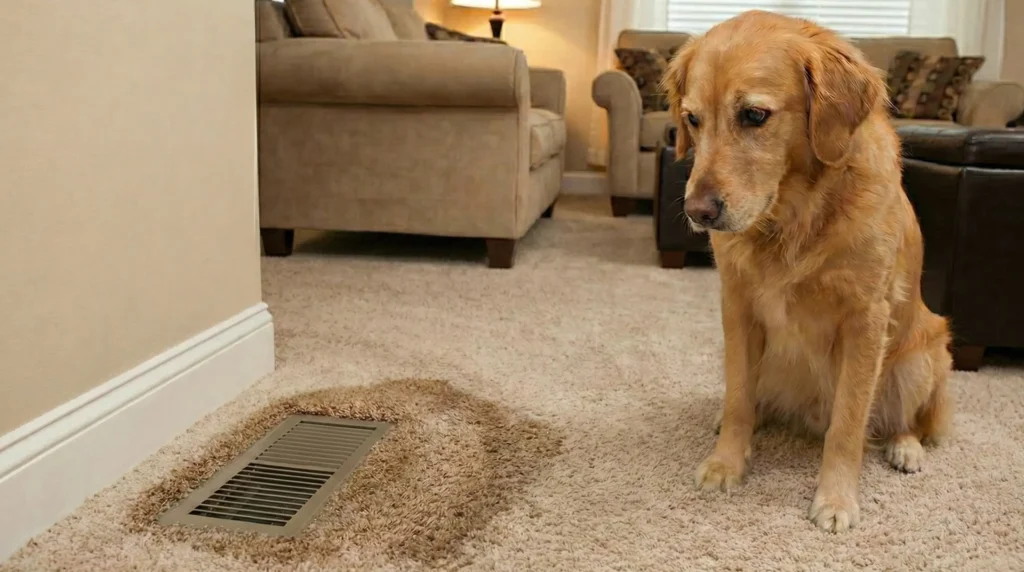
Next, focus on the boot itself. In many homes, this area holds most of the urine odor. Pet urine can soak into dust, drywall edges, and flooring gaps that gather inside the boot. Because it sits at the start of the duct system, any odor here spreads quickly when the HVAC system runs.
So, if your pet has ever had an accident near a floor or low wall vent, assume the boot needs cleaning. This approach helps you address the odor more completely from the start.
Locating Where Pet Urine Entered the Duct
Before you start cleaning, you need to locate every area affected by urine. Often, the odor smells strongest when the HVAC system runs. That timing makes it hard to trace the source by smell alone.
Use a UV Black Light
A UV black light is one of the easiest ways to find pet urine. First, turn off the room lights and close the shades. Then, slowly scan around floor and low wall vent register openings. Fresh or dried urine often glows under the UV beam. This glow reveals stains you may not notice in normal light.
Next, check the flooring, trim, carpet edges, and the visible surfaces inside the vent boot. Whenever possible, look straight down into the boot from above. Only reach into the opening if you can do so safely and without forcing parts loose.
Clean the Area Around the Vent Register
First, focus on the floor or wall area around the vent register. Pets usually urinate near floor or low wall vents, and urine can flow down into the vent boot. If you do not clean the surrounding flooring, your pet may instinctively return to the same spot.
Safe Cleaning Options
- Baking soda & white vinegar – This classic combination helps neutralize odors. However, always check with your flooring manufacturer before using it on hardwood or delicate surfaces.
- Non-Toxic Enzyme Pet Cleaner – In many cases, this option works best. Enzyme cleaners break down the organic compounds in urine instead of simply masking the smell. They are usually safe for most flooring and often provide very effective results.
In addition, avoid cleaning products that contain ammonia. Because ammonia is one of the natural components in pet urine, its scent can encourage pets to re-soil the same area.
Important Safety Warning
Never spray chemicals directly inside your air ducts. Use only specialized HVAC-approved cleaners inside ductwork. Spraying household chemicals into a vent can circulate fumes throughout the home and can also damage the system. If chemicals accidentally enter the duct, open nearby windows and contact a professional right away.
Ready to Breathe Easier in Your Home?
If you suspect pet urine has affected your air ducts, Ductworks can help. While no company can guarantee complete odor removal, source removal remains the most effective remediation method.
Get a Free Residential Estimate