
Simple Fixes to Restore Even, Comfortable Airflow in Every Room
We heat and cool our homes to keep our families comfortable. However, in many houses it is hard to maintain a consistent temperature from room to room. Some airflow problems are easy to fix. Others require a more complete approach to your HVAC system.
Why Solving Home Airflow Problems Is Worth the Effort
Good airflow keeps temperatures even, helps your HVAC equipment last longer, and supports healthier indoor air. When airflow is poor, you may notice hot and cold spots, stuffy rooms, more dust, and higher energy bills.
The good news is that you can often improve airflow with a few targeted steps. Below are seven common causes of airflow problems and what you can do to address each one.
Seal Leaky Air Ducts
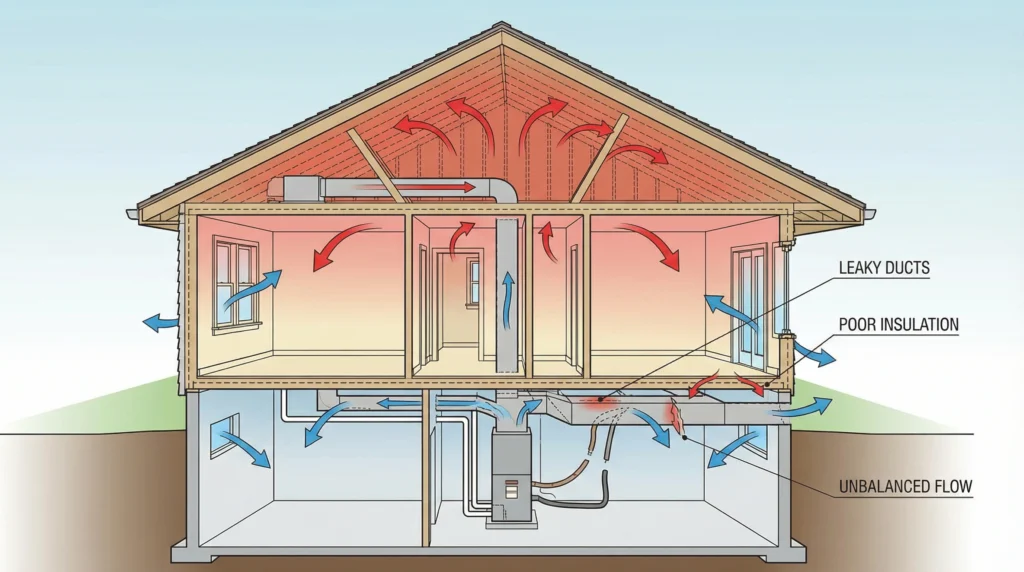
Repairing leaky air ducts is often the single best step a homeowner can take to solve airflow problems. Ductwork is built from sections that are sleeved and screwed together. In many homes, these joints are not airtight.
What Happens When Ducts Leak?
- Conditioned air escapes into attics, crawlspaces, or wall cavities.
- Rooms at the end of the duct run receive less air than they should.
- Unconditioned and dusty air can be drawn into the system.
Sealing duct joints with an approved mastic or sealant can significantly improve airflow and comfort. As a result, you may notice a more even temperature throughout the home and better overall efficiency.
Address Distance from the Furnace and Air Conditioner
As your furnace or air conditioner runs, it pushes air through a network of ducts to each room. The farther a room is from the equipment, the more that airflow can drop.
Why Distance Matters
Air pressure is strongest near the furnace or air handler. As air travels to the outer ends of the duct system, pressure and airflow can weaken, especially if the duct design is poor or has many sharp turns.
In many cases, this is a design or installation issue. Sometimes, a contractor can modify the ductwork to reduce restrictions and increase airflow. In other homes, the best solution is to install zoning dampers that regulate air to different areas for better balance.
An experienced HVAC professional can review your layout and recommend the most cost-effective option.
Add or Improve Return Air Vents
Airflow is not just about supply vents that blow air into a room. It also depends on return vents that pull air back to the furnace or air conditioner.
Signs You May Lack Return Air
- Rooms feel stuffy or stagnant even when the system is running.
- Doors slam or walls “whistle” when the system is on.
- One or two rooms never seem to match the rest of the house.
Adding return vents in areas with limited airflow often improves air circulation throughout the home. As a result, your HVAC system can move air more freely and maintain a more even temperature.
Clean a Dirty Furnace Fan Blower
Inside the furnace or air handler cabinet, a fan blower moves air through the duct system. Over time, dust and debris can build up on the blower blades.
How Dirt Affects Airflow
When fan blades are coated in dust, they cannot “shear” and move air as effectively. As a result, airflow drops, and the system works harder to keep up.
Scheduling a professional furnace cleaning on an annual basis helps remove this buildup, restore blower performance, and improve airflow to all areas of the home.
Clear a Clogged Air Conditioner Coil
If you have central air conditioning, there is an evaporator coil located above the furnace cabinet. This coil is made of small fins that absorb heat and cool the air as it passes through.
Why Coils Need Cleaning
Over time, dust and debris collect between the coil fins. When the coil becomes clogged, it restricts airflow and reduces the amount of air the system can deliver.
Having the evaporator coil cleaned on a regular basis helps restore airflow, improve cooling performance, and reduce strain on your equipment. It is an important part of any thorough HVAC maintenance plan.
Confirm Properly Sized Heating and Cooling Equipment
Before installing a new system, contractors should perform a heat load calculation to determine how many BTUs of heating and cooling your home needs.
What Happens When Equipment Is the Wrong Size?
If the HVAC system is undersized, it may run constantly and still fail to keep your home comfortable. If it is oversized, it may short-cycle, leading to uneven temperatures and excess wear.
Both situations can create airflow problems. An experienced HVAC technician can perform a proper load calculation and verify that your equipment is sized correctly for your home and duct system.
Check for Disconnected or Crushed Air Ducts
If a room has no airflow or very limited airflow, a disconnected or crushed duct may be the cause. These issues often stem from poor installation or damage in attics, crawlspaces, or walls.
How to Inspect for Problems
First, remove the vent register and look into the duct with a flashlight and a small mirror if needed. If you see a gap or a flattened section within reach, a professional can refasten or replace that duct run.
In some cases, disconnections are hidden deeper in the system. Then the best approach is to have the duct scoped with a camera to find the break and plan the right repair.
Once disconnected or crushed ducts are fixed, airflow to the affected rooms usually improves right away.
Small Fixes That Add Up to a More Comfortable Home
Home airflow problems rarely have a single cause. Instead, they usually come from a mix of duct leaks, design issues, dirty components, and equipment sizing. The good news is that each step you take can bring your home closer to even, reliable comfort.
Work through these seven areas with a trusted HVAC professional. Together, you can improve airflow, support better indoor air quality, and help your heating and cooling equipment run more efficiently for years to come.
