
When Air Handler Insulation Breaks Down, Comfort and Air Quality Drop Fast
In commercial buildings, the Air Handling Unit (AHU) moves, filters, and conditions air all day. Teams often focus on fans, coils, and filters. However, internal fiberglass insulation also drives thermal control, noise reduction, and condensation control. When the liner wears down, fibers and debris can reach downstream components and occupied zones.
Three Jobs AHU Internal Insulation Handles Every Day
Thermal Efficiency
The liner slows heat loss inside the cabinet and mixing sections. It helps supply air reach zones closer to the design temperature and load, effectively reducing the overall energy strain on the central plant during peak operation.
Acoustic Control
The liner absorbs fan rumble and high-velocity turbulence at the source. It helps teams protect quieter areas like offices, classrooms, and clinics, ensuring a distraction-free environment for occupants throughout the facility.
Condensation Prevention
Insulation prevents moisture-related issues in commercial air handlers primarily by controlling condensation. It acts as a thermal barrier, stopping cold metal surfaces from contacting warmer, humid ambient air, which prevents sweating and reduces the risk of microbial growth.
How Fiberglass Liner Fails Inside an Air Handler
The Mechanics of Breakdown
Fiberglass liner typically uses adhesive and mechanical fasteners to hold tight to the cabinet wall. The factory-facing layer protects the fibers from the airstream. Over time, turbulence, vibration, humidity swings, and temperature cycling wear that surface down, eventually exposing the raw fiberglass beneath.
Common Visual Indicators
- Erosion: Worn areas where the facing scuffs away.
- Delamination: Corners lift or sheets pull away from metal.
- Loose Fasteners: Pins back out as vibration builds.
For a practical overview of the material and typical applications, read What Is Fiberglass Duct Liner? A Colorado Facility Manager’s Guide .
Clean the Liner First, Then Seal or Coat With Confidence
Controlled Agitation
Techs use soft-contact tools that lift debris without tearing the facing. They avoid stiff brushes that scuff the liner and speed erosion.
HEPA Collection
Techs pair agitation with high-volume extraction and true HEPA filtration. They capture fibers and fine dust before the system spreads them downstream.
Access & Closure
Techs focus on the careful removal and detailed closure of air handler access panels. This grants full reach for cleaning tools while preserving the unit’s airtight seal.
For a deeper breakdown of “do no harm” methods, review Cleaning Internally Lined Ductwork: Protocols for Commercial Facilities . Teams often apply these same principles in air handlers and internally lined duct sections.
Use Encapsulation to Rebuild the Primary Seal When the Liner Still Holds Shape
Why Teams Choose Encapsulation
Encapsulation locks down loose fibers and restores a smoother air-side finish. It can extend cabinet life while limiting downtime and replacement scope.
Choose Coatings Built For HVAC
HVAC coatings flex through thermal cycles and resist moisture and mold pressure. They also stand up to high-velocity shear forces near fans and turns.
For inspection cues and coating expectations, read Fiberglass Duct Liner Encapsulation and Sealing: Colorado Commercial Guidance .
When the Liner Fails at Scale, Replacement Often Protects the System Best
Replacement Triggers You Can Spot
- Water damage spreads across multiple cabinet sections.
- Delamination shows up on large surfaces and corners.
- Erosion exposes raw fibers in high-velocity zones.
- Fasteners fail in multiple locations at the same time.
Why Closed-Cell Foam Gets Attention
Closed-cell foam offers a smooth, non-porous surface that resists dirt and moisture. However, before application, the unit must be inspected for access and substrate condition. Teams must verify that full replacement is the best corrective step for the facility compared to repair.
Use Simple Checks to Prevent Expensive AHU Cabinet Failures
Inspect Early and Document Changes
Schedule quick visual checks at consistent access points during service visits. Capture photos over time to spot wear before fibers migrate into the system.
Clean Correctly Before Sealing
Remove debris first, then apply coatings on a prepared surface that bonds well. That sequence reduces early failures and protects the liner from added erosion.
Control Moisture at the Source
Keep drains, traps, and pans clear so water does not reach insulated cabinet walls. Fix cabinet leaks quickly to stop delamination and odor-related complaints.
Match the Fix to Liner Condition
Use encapsulation when the liner holds shape and damage stays surface-level. Plan replacement when water damage or wide delamination threatens performance.
Catch problems early to keep costs controlled and downtime predictable. Treat air handler insulation like a core performance component, not a minor detail.
Commercial Estimate Request
If you see erosion, delamination, or fiber release, schedule a walkthrough and document the scope. Ductworks can help you plan access, cleaning steps, and repair options for your facility.
Request a Commercial Estimate Fast response • No pressureCommercial Air Duct Cleaning Resources
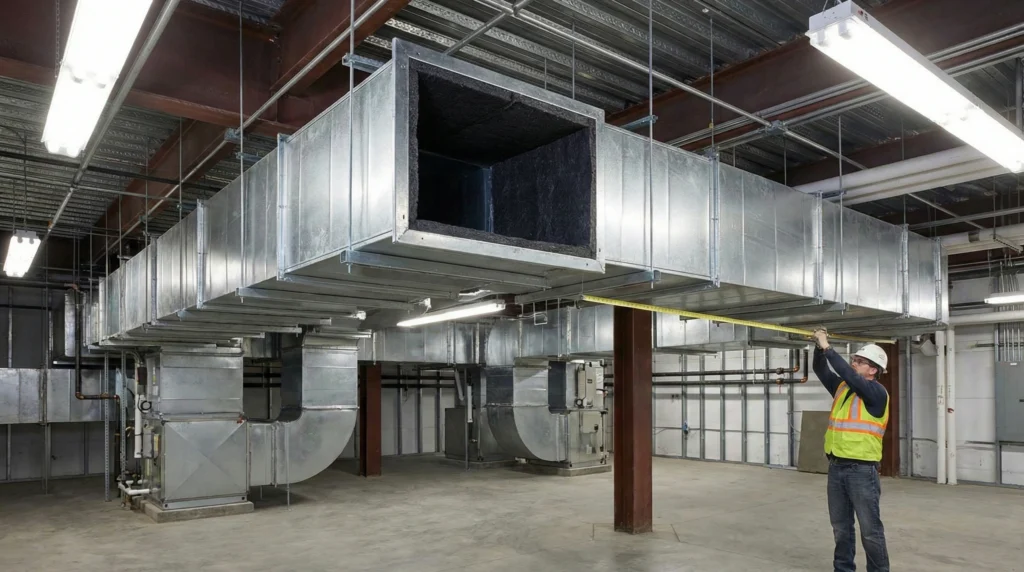
What Is Fiberglass Duct Liner? A Colorado Facility Manager’s Guide to Internally Insulated Ductwork
Commercial HVAC • Internally Lined Ducts What Is Fiberglass Duct Liner? Internal duct insulation that improves sound control, thermal stability, and space-efficient…
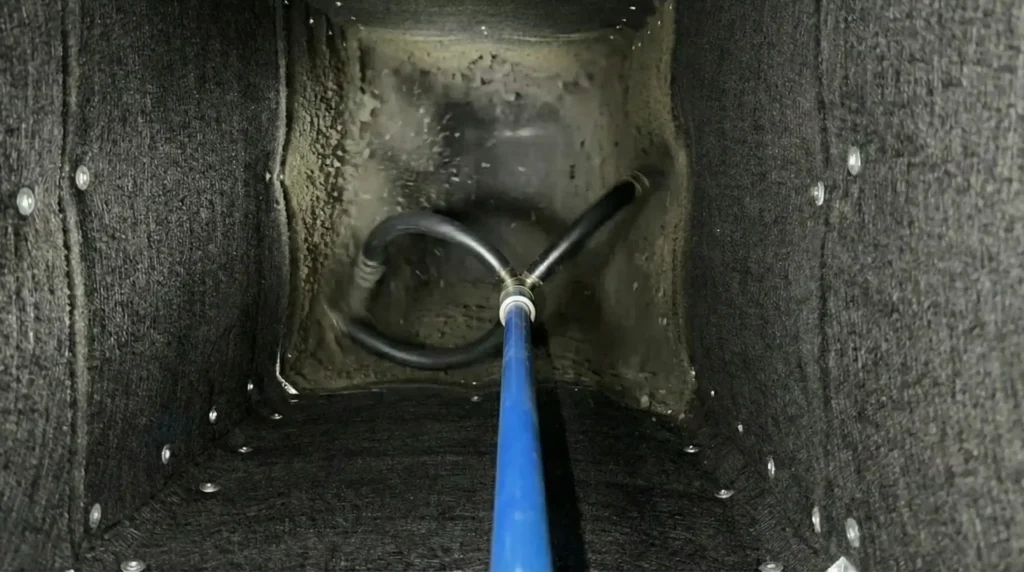
Cleaning Internally Lined Ductwork: Protocols for Commercial Facilities
Commercial HVAC Maintenance • Lined Ducts Cleaning Internal Fiberglass Ductwork Commercial air duct cleaning for lined systems requires specialized care. Unlike bare…
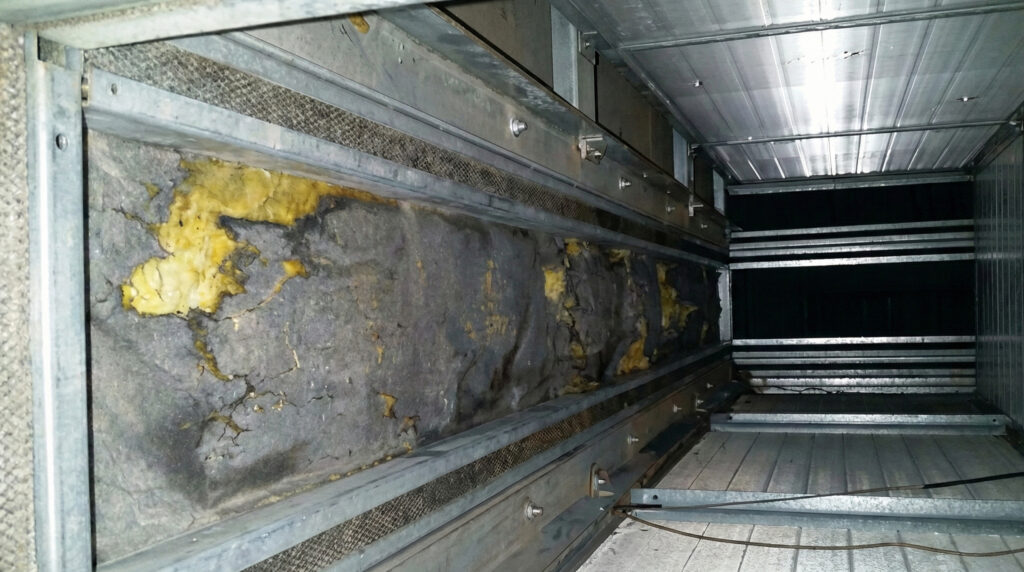
Commercial Air Handler Insulation: Protecting the Heart of Your HVAC System
Commercial HVAC • Air Handler Performance • Internal Insulation When Air Handler Insulation Breaks Down, Comfort and Air Quality Drop Fast In…
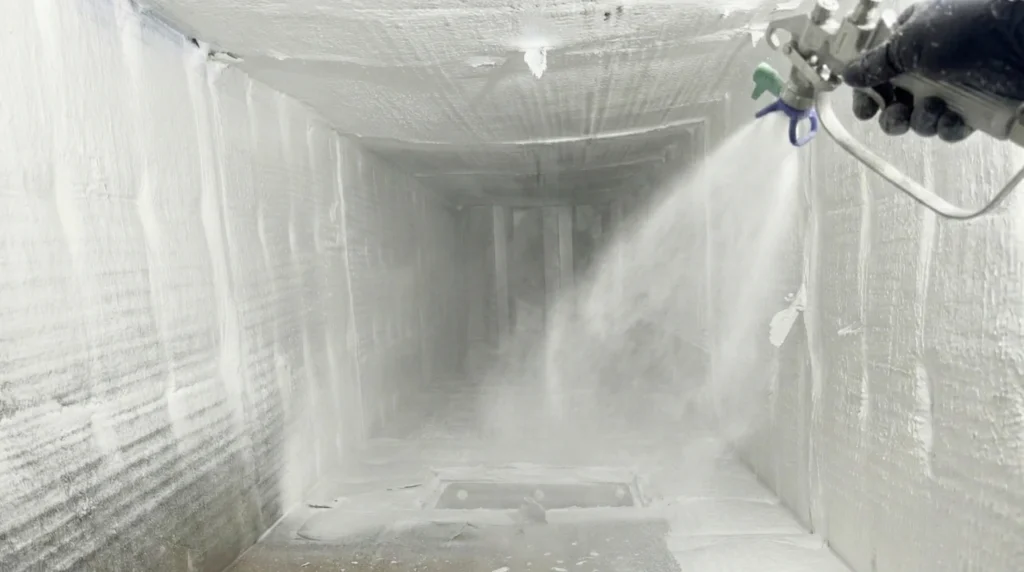
Fiberglass Duct Liner Encapsulation and Sealing: Colorado Commercial Guidance for Long-Term Performance
Insulation Preservation • Long-Term Maintenance Encapsulation and Sealing for Fiberglass Duct Liner Many HVAC systems use fiberglass duct liner for thermal insulation…
