Colorado Allergy Season: How Pollen And Mold Infiltrate Homes
Why Front Range Homes Trap Seasonal Allergens And How Homeowners Can Reduce Indoor Exposure
The Unseen Indoor Allergen Problem
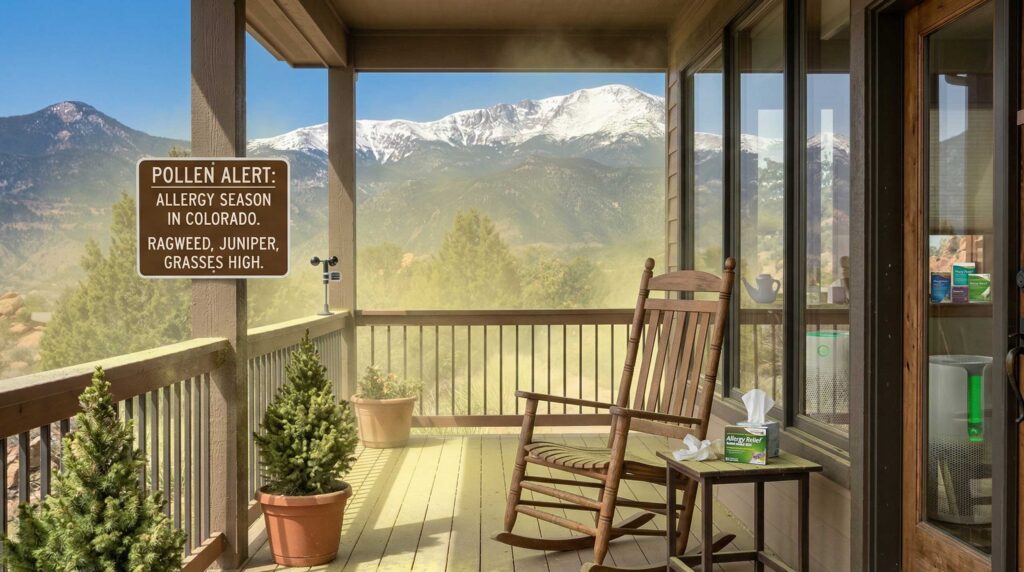
Colorado is famous for its crisp air and stunning landscapes, but those same elements often invite unwanted guests—pollen, ragweed, and mold—into your home. These allergens do not stay on the doorstep. They enter every time a door opens, a window stays cracked, or a pet runs in from the yard.
Once indoors, these particles can move into the HVAC system and collect on the interior surfaces of the ductwork. Over time, your home’s ventilation can become part of the seasonal struggle, making indoor air quality an important part of allergy season.
Why Colorado Allergy Season Hits So Hard
Allergy season along the Front Range is often long and intense because of Colorado’s unique mountain-to-plains geography. The dry climate helps pollen stay airborne longer, while frequent winds along the I-25 corridor can move allergens across a wide area.
High Elevation And Strong Sun
Strong sunlight at higher elevations can increase pollen production. Because of that, many Colorado homeowners notice heavy seasonal symptoms.
Dry Air Keeps Particles Moving
Dry air allows pollen and mold spores to stay suspended longer. Therefore, these contaminants can travel farther and remain indoors for longer periods.
Foothill Winds Spread Allergens
Wind can carry allergens across long distances. As a result, symptoms may develop even when the source is miles away.
Urban Landscaping Extends The Season
Non-native grasses and ornamental plantings can lengthen allergy seasons. Consequently, pollen cycles may overlap in many Colorado neighborhoods.
When Is Allergy Season In Colorado?
Allergy season in Colorado usually runs from March through October. Tree pollen peaks in spring, grass pollen rises in early summer, and ragweed becomes strongest from late summer into fall. Meanwhile, mold spores can be present all year, especially after moisture events or in damp indoor areas.
Spring
Tree pollen becomes dominantEarly Summer
Grass pollen increasesLate Summer To Fall
Ragweed and weed pollen peakYear-Round
Mold spores follow moistureConditions That Increase Pollen And Mold
- Wind spreads pollen across the Front Range.
- Dry air keeps particles airborne longer.
- Warm weather increases plant activity.
- Rain and snowmelt can support mold growth.
How Homeowners Are Usually Alerted
- Sneezing, congestion, or itchy eyes increase indoors.
- Symptoms worsen when the HVAC system runs.
- Dust collects quickly near vents and returns.
- Musty odors develop in certain rooms or levels.
- Symptoms improve outside but continue inside.
How High Pollen And Mold Levels Are Reported In Colorado
Across Colorado, pollen and mold levels are reported through weather apps, local news, radio updates, and online forecasts. These alerts help homeowners understand when outdoor conditions may start affecting indoor air quality.
Local News
Daily pollen counts are often shared during morning and evening weather segments.
Radio Reports
Commute-time updates often mention high pollen days and changing outdoor conditions.
Weather Apps
Many apps track pollen, mold, and air quality in real time by day and location.
Online Forecasts
Multi-day outlooks can show when allergen conditions are expected to rise or ease.
What To Do During High Allergen Days
When pollen and mold counts rise, a few practical steps can help reduce how much outdoor contamination enters the home and moves through the ventilation system.
Keep Windows Closed
This helps limit direct entry during peak pollen periods.
Run Filtered Indoor Air
Air conditioning with a proper filter usually offers better protection than open windows.
Check The HVAC Filter
High pollen periods can load filters faster than many homeowners expect.
Reduce Indoor Transfer
Remove shoes and outerwear near the entry to keep allergens from spreading.
Watch For Indoor Symptoms
If symptoms worsen inside, allergens may be building up and circulating indoors.
Clean Pets After Time Outdoors
Wiping paws and brushing fur can reduce how much pollen is carried back inside.
The Continuous Cycle of Indoor Airflow
Your Home’s Respiratory System
To understand how indoor air quality impacts your health, it is essential to recognize that the air in your home is in a state of perpetual circulation. Your HVAC system functions as the “lungs” of the property, creating a continuous loop of airflow.
The process begins when the furnace or air handler draws air from the living spaces through the return air vents. This air is pulled through a filter, conditioned (heated or cooled) by the HVAC equipment, and then redistributed into each room through the supply vents.
The Role of Return Ducts: Collection and Accumulation
Return air ducts are responsible for pulling air from the occupied spaces back to the HVAC unit. Because this air is drawn from the ambient environment prior to filtration, it carries with it any airborne contaminants present in the home—including pollen, pet dander, and mold spores.
The Development of Indoor Bio-Burden
As these particles travel through the return system, they do not all remain airborne; a significant portion settles and adheres to the interior walls of the ductwork. Over time, this creates a layer of “bio-burden” within the returns. The longer the interval between professional cleanings, the greater this accumulation becomes, effectively turning your ductwork into a reservoir for allergens.
Filtration: Protection and Physical Limitations
While the HVAC filter serves as the primary line of defense, it is important to understand its mechanical limitations. A filter’s efficiency is a delicate balance:
- Airflow vs. Capture: A filter must be porous enough to allow for sufficient airflow; if a filter were dense enough to capture every microscopic particle, it would “starve” the HVAC system, causing the blower motor to overheat and the system to fail.
- The Bypass Effect: Even high-quality filters cannot stop 100% of contaminants. Particles can bypass the media through small gaps in a poorly fitted filter frame or pass through the fibers as the filter becomes “loaded” and air velocity increases through the remaining clear spots.
Supply Duct Contamination and the Perpetual Cycle
Once allergens bypass the filtration system or originate from debris settled within the HVAC cabinet, they enter the supply ducting. Unlike the returns, which pull air in, the supply ducts push air out at a high velocity.
The Danger of Recirculating Allergens
When allergens reach the supply side, they are distributed directly into your breathing zone. This creates a perpetual cycle: allergens settle on furniture and flooring, are kicked back into the air by household activity, are drawn back into the returns, and are eventually redistributed by the supply vents. Without professional intervention to break this cycle by removing the source of the accumulation, the HVAC system inadvertently acts as a delivery mechanism for the very allergens you wish to avoid.
When A Filter Is No Longer Enough
Allergens Can Build Up Inside The System
During heavy allergy periods, filters can load quickly. After that, some fine debris may settle deeper inside the system. When buildup is present, replacement of the filter alone may not fully address the problem.
Professional Source Removal Targets The Accumulation
Professional cleaning focuses on removing the source of contamination rather than letting it continue to circulate. You can learn more about the process of residential air duct cleaning and how it supports cleaner indoor air.
Why Cleaning Method Matters
Negative Pressure Can Pull Outside Air Indoors
Some equipment setups remove large volumes of air from the home. As a result, outside air can be pulled through gaps in the building envelope. During allergy season, that incoming air may contain pollen and mold.
Homeowners Should Understand The Difference
Equipment choice affects indoor conditions during the cleaning process. For a closer look at this issue, read Truck-Mounted Or Portable? The Truth About Negative Air & Make-Up Air.
Source Removal: Resetting Your Indoor Air Quality
Addressing Persistent Airborne Contaminants
When seasonal allergens continue to circulate through the home, the issue may extend beyond routine filter changes. In many cases, debris that has accumulated inside the ventilation system becomes a persistent source of indoor contamination.
Professional Source Removal: A System Reset
Professional air duct cleaning focuses on source removal, which means the mechanical extraction of accumulated debris from the ductwork. Over time, HVAC systems can collect dust, pollen, and mold spores that standard filtration alone may not fully address.
By removing this buildup from the duct walls, the system is effectively reset. This process eliminates a major reservoir of allergens, reduces ongoing recirculation, and provides a cleaner foundation for indoor air quality. Learn more about how residential air duct cleaning supports a healthier home.
Why Methodology Matters: Controlling Pressure And Airflow
Removing debris is the objective. However, the method used to perform the cleaning directly affects indoor conditions during the process. Professional duct cleaning relies on negative air to capture loosened debris. The difference lies in how that air is controlled.
The Risk of Outdated Negative Air Methods
While outdated but still in use, open-exhaust cleaning methods—such as truck-mounted or outdoor gas-powered vacuums—create a dangerous pressure imbalance by exhausting massive volumes of air to the exterior. As this air leaves, your home is forced to replace it by drawing in unfiltered “make-up air” through attic gaps, crawlspaces, windows, and doors. During allergy season, this flawed process effectively pulls in the very same contaminants—and often more—than you paid to have removed.
The Solution: Closed-Loop Negative Air
To properly utilize negative air without compromising your home, a closed-loop, HEPA-filtered system is the only safe method. By filtering the air and returning it immediately to the living space, the system maintains neutral pressure. This ensures that debris is mechanically extracted and captured at the source, while preventing the vacuum effect that sucks outside pollutants back into your home.
Residential Estimate Request
If seasonal allergens are moving through your home, a professional evaluation can help identify the right next step.
Residential Estimate Request