

Understanding the Hidden Highways of Your Home
In the framework of a modern home, the unseen systems matter. They control comfort, efficiency, and airflow. Although finished surfaces get attention, the hidden “highways” behind drywall determine long-term performance. Because of this, the choice between flexible ductwork and rigid sheet metal is more important than many homeowners realize.
What Are Flex Lines?
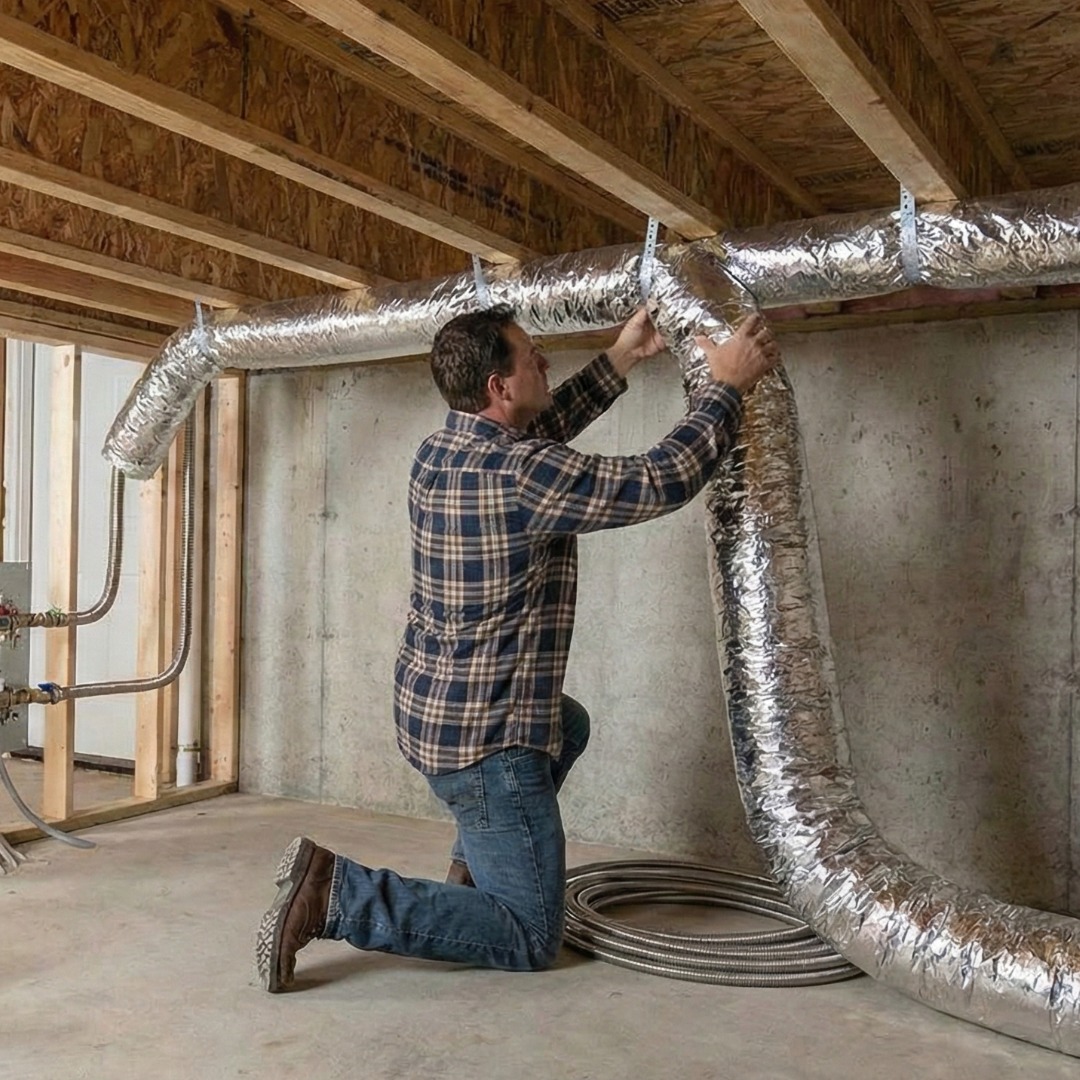
Flex ductwork is common. It is made from a wire helix wrapped in a plastic liner and covered with insulation. A protective jacket creates a vapor barrier. Because the product bends easily, installers use it in attics, tight chases, and retrofits.
Builders choose flex because it adapts quickly. Installers route it around wiring and trusses with minimal effort. While this flexibility can be helpful, it also introduces airflow problems that affect comfort later.
Why Builders Use Flex
- Lower Cost: Flex lines cost less to buy and install.
- Fast Installation: One technician can run flex through an attic quickly.
- Noise Reduction: Its soft walls reduce fan noise and vibration.
The Budget Trap: Where Flex Falls Short
The Physics of Airflow
Air wants smooth surfaces. Because flex ducts have a ribbed interior, friction increases. As a result, airflow slows down. Rooms may not receive enough conditioned air. Larger flex sizes are sometimes required to compensate.
- Longer duct runs have more interior surface area, which increases friction losses as air moves through the system.
- Flexible ducts often have corrugated, uneven interiors that create turbulence and resistance compared to smooth, rigid ducts of the same size.
- Flex lines are frequently installed with multiple bends and curves, and each change in direction adds measurable resistance to airflow.
The Sag and Kink Problem
Flex ducts can sag. They can also collapse when bent too sharply. A single kink can block airflow. When this happens, the HVAC system works harder, and comfort suffers.
Durability Concerns
The material tears easily. Tools, debris, or pests may damage it. Small holes allow air loss. Over time, performance decreases.
The Better Option: Rigid Sheet Metal
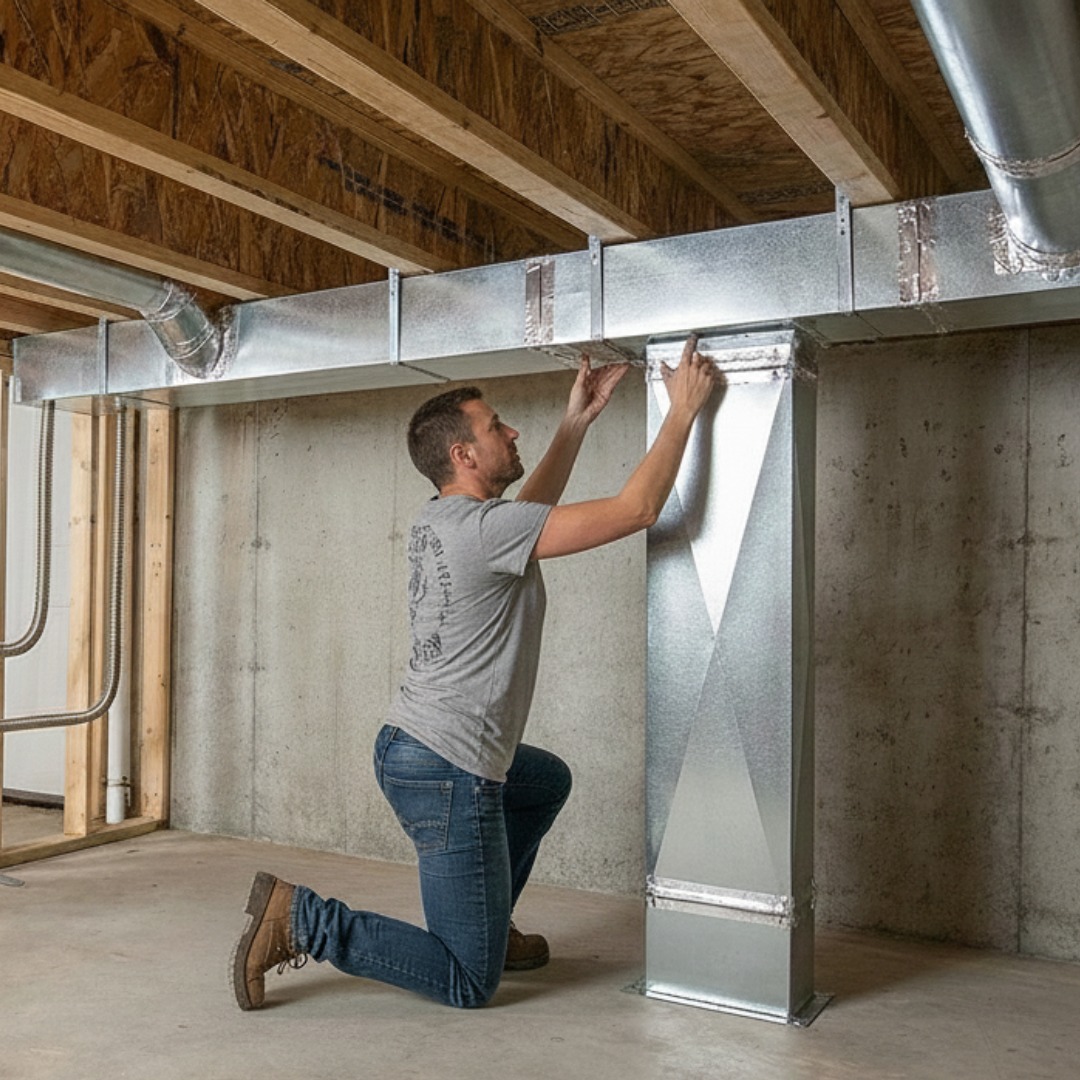
Sheet metal is rigid and smooth. It will not sag or collapse. It lasts for decades. Because of its smooth interior, air flows freely with minimal resistance. This reduces strain on the HVAC blower and improves room-to-room balance.
Unlike flexible ducts that can crimp, sag, or collapse over time due to fatigue or poor installation, sheet metal maintains its shape and structural integrity. When it is supported and sealed correctly, it becomes a stable, predictable pathway for air.
To reach peak performance, sheet metal must be sealed. Each seam needs attention to prevent leakage. When sealed correctly, sheet metal becomes an airtight delivery system.
The Importance of Sealing
Sheet metal joints leak if left untreated. Because of this, professionals seal every seam using:
- Mastic: A brush-applied sealant that hardens and seals the joint.
- UL-Rated Foil Tape: Not household duct tape, but HVAC-specific foil tape.
The Verdict
Flex ducts do offer benefits. They work well for short, final connections to ceiling vents. However, using them throughout the entire system creates long-term airflow and durability concerns. Because of this, sheet metal is recommended for main trunks and performance-focused homes.
Planning a Remodel? Ask About the Duct Material.
If you are remodeling your home and the contractor offers flex duct as a cost-saving option, do your homework. Ask why it is being recommended and where it will be used. In many cases, it should be limited to short run-outs, not the entire system.
No matter which product is chosen, make sure the ductwork remains accessible for future repairs and inspection. Well-planned access points make it easier to diagnose comfort issues, seal leaks, and clean the system when needed.
Remodel Tip
Before signing a remodel contract, ask your contractor to list the duct materials in writing. Confirm where flex will be used and where sheet metal will be installed.
Request photos or a quick walkthrough while the framing is open. Good documentation and smart access planning today make future inspections and repairs much easier.
Although sheet metal requires more planning, sealing, and skilled labor, the results last. Better airflow, fewer hot and cold spots, and higher efficiency make it the superior long-term choice.
Quick Comparison: Flex Lines vs. Sealed Sheet Metal
| Feature | Flex Lines | Sealed Sheet Metal |
|---|---|---|
| Cost (Material & Labor) | Low — cheaper material and fast installation. | High — requires skilled labor and precise fabrication. |
| Installation Speed | Fast — bends easily around obstacles. | Slow — measured, cut, and assembled on-site. |
| Airflow Efficiency | Fair to poor — ribbing, longer runs, and extra bends increase friction and restrict airflow. | Excellent — smooth, rigid interiors allow efficient airflow with minimal resistance. |
| Durability | Low — easily crushed, torn, or damaged by pests. | High — rigid and long-lasting under normal conditions. |
| Noise Level | Quiet — soft walls absorb sound and vibration. | Louder — metal may transmit vibration if not isolated. |
| Best Use Case | Budget builds and short run-outs to supply vents. | Main trunks and high-performance homes focused on efficiency. |
Can flexible ductwork be cleaned?
Can flex-line be cleaned? Yes, it can. However, it requires specific preparation and gentle methods to protect the liner. If you need cleaning for flex duct runs in your home, click the button below and note “flex duct cleaning” in your request.
Residential Estimate Request