
Furnace Turning On and Off? Short Cycling Causes, Costs, and What to Do
Short cycling creates rapid on-and-off heating that wastes energy and wears parts faster
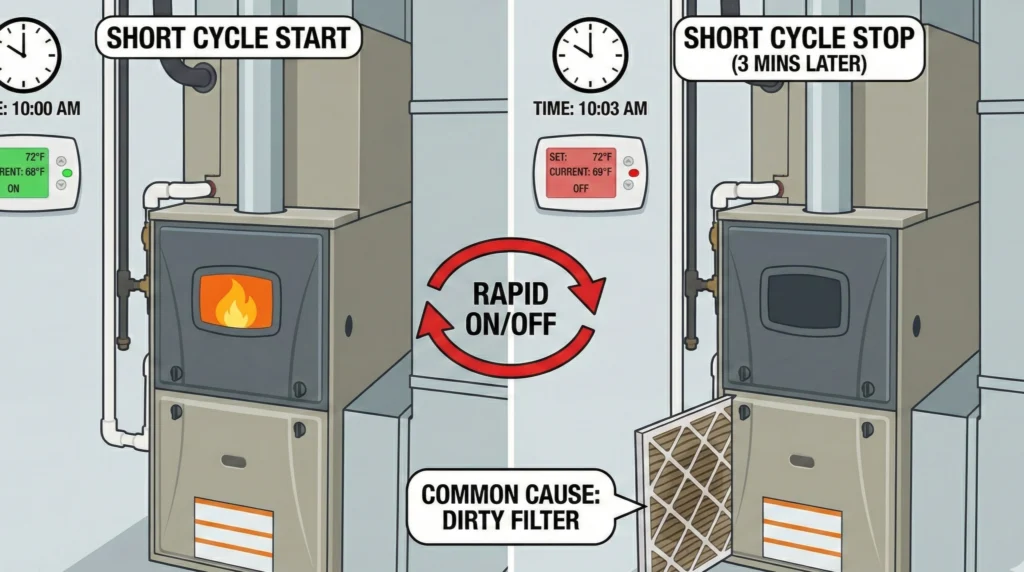
Short cycling happens when your furnace starts, runs briefly, and shuts off unexpectedly. This stop-and-go pattern prevents your home from reaching a comfortable temperature. While airflow issues are the most common culprit, identifying the specific cause early can save you from costly repairs.
What Is Furnace Short Cycling?
Furnace short cycling occurs when your heating system turns on and off repeatedly without completing a full heating cycle. Instead of running for a standard 10 to 15 minutes to reach the thermostat’s set temperature, the furnace cuts out after only a few minutes.
This rapid repetition puts immense strain on the system. Ideally, a furnace should run steadily to maintain an even temperature, rather than engaging in constant, burst-like activity.
Why Short Cycling Gets Expensive
Every time your furnace starts, the ignition system and motors work their hardest. Frequent startups significantly accelerate wear and tear, leading to premature breakdowns. Additionally, the system uses the most energy during startup, driving up your utility bills.
Addressing short cycling early protects your equipment investment. Simple troubleshooting steps can often resolve the issue before permanent damage occurs to the heat exchanger or blower motor.
Symptoms of a Short Cycling Furnace
Patterns matter more than a single shutoff. If you notice these specific behaviors occurring repeatedly within an hour, it is time to investigate.
Frequent On/Off Cycles
Listen for the sound of the furnace kicking on and shutting down repeatedly. If the system starts up more than four or five times in a single hour, it is likely short cycling.
Short Run Times
A healthy heating cycle should last roughly 15 minutes. If your furnace shuts down after running for only two or three minutes, the system is cutting out before the job is done.
Evaporator Coil Restriction
Your furnace blower pushes air through the evaporator coil year-round. If this coil is clogged with dust, airflow drops significantly, causing the furnace to overheat and shut down for safety.
Higher Energy Bills
Check your recent utility statements for unexplained spikes. Starting a furnace takes more energy than running it; constant restarting will drastically reduce your home’s energy efficiency.
Thermostat Never “Catches Up”
If your house feels cold despite the thermostat being set high, the furnace may be quitting early. The short bursts of heat are not long enough to actually warm the living space.
Startup Stops Within Seconds
Watch the burner assembly when the heat calls. If you see the flames ignite but then immediately extinguish within a few seconds, a safety sensor is likely halting the process.
3 Safe Checks You Can Do Right Away
Airflow and venting drive the majority of short cycling problems. You can perform these three simple checks without needing tools or opening the furnace cabinet.
Replace the Air Filter
A dirty filter is the #1 cause of short cycling. Install a clean filter immediately to restore proper airflow. If the filter is clogged, heat builds up and trips the high-limit switch.
Open and Clear Vents
Walk through your home and ensure all supply and return vents are open. Move furniture, rugs, or drapes that might be blocking airflow, as this backpressure can overheat the system.
Check Outdoor Venting
Inspect the white PVC intake and exhaust pipes on the side of your home. Clear away any snow, ice, leaves, or debris. A blocked exhaust pipe will trigger a safety shutdown instantly.
If your furnace continues to short cycle after you have completed these checks, the issue may be mechanical. Contact a licensed HVAC professional for a diagnosis.
Common Causes and Practical Solutions
Some issues stem from simple maintenance items you can handle. Others involve internal components that require a licensed HVAC professional.
1) Dirty or Clogged Air Filter
A clogged filter restricts air entering the furnace, causing heat to build up inside the heat exchanger. The high-limit switch detects this dangerous heat and shuts the burners off. Once the system cools down, it restarts, only to overheat again.
What to do: Replace the filter immediately. If the cycling stops, the problem is solved. If it continues, call a pro.
2) Thermostat Setup or Location
Thermostats placed near heat sources (like kitchens or sunny windows) or cold drafts give false readings, causing erratic cycling. Additionally, low batteries or loose wiring can interrupt the signal sent to the furnace control board.
What to do: Check the batteries and note if cycling happens during sunny parts of the day. Share this with your technician.
3) Dirty Evaporator Coil or Ducts
Even in winter, air must pass through the AC evaporator coil. If this coil is plugged with dust, it acts like a wall, trapping heat in the furnace. Blocked return air ducts or closed supply registers create the same overheating effect.
What to do: Ensure all vents are open. If the filter was dirty for a long time, a pro may need to clean the coil.
4) Flame Sensing or Ignition Safety
The flame sensor is a safety device that confirms fire is present. If the sensor is dirty or corroded, it cannot detect the flame. The control board assumes there is a gas leak risk and shuts the valve immediately after ignition.
What to do: This requires a professional repair. Do not attempt to clean sensors yourself, as they are fragile.
5) Oversized Furnace
If a furnace is too big for the home, it heats the space too rapidly. The thermostat shuts it off quickly, but the walls and furniture haven’t absorbed the heat yet, so the room cools fast and the cycle repeats.
What to do: Ask an HVAC professional to perform a load calculation to see if your unit is sized correctly for your home.
6) Other Mechanical or Safety Faults
Internal components like a failing blower motor, a stuck inducer fan, or a faulty limit switch can all trigger short cycling. Blocked flue pipes are particularly dangerous and will cause an immediate safety shutdown.
What to do: Call for professional diagnostics immediately, especially if you suspect venting issues or hear unusual noises.
When a Professional Should Be Called
Begin by changing the filter and ensuring all vents are open. If the furnace continues to short cycle after you have taken these steps, you need a licensed HVAC professional for deeper diagnostics. Be sure to mention any error codes you see on the furnace display, as this speeds up the troubleshooting process.
Key Indicators:
- A new air filter did not resolve the rapid cycling issue.
- The furnace ignites but shuts off within a few seconds.
- You suspect a blockage in the intake or exhaust pipes.
- The furnace is making loud banging or grinding noises.
If a CO Alarm Sounds
Exit the home immediately and call emergency services. Keep the furnace turned off until a licensed professional inspects it.
Treat carbon monoxide risks as an urgent emergency.
A Ductworks Note
Ductworks, Inc. specializes in professional HVAC system cleaning. While we do not perform repairs or installations ourselves, we connect our customers with trusted HVAC partners when those services are needed.
